
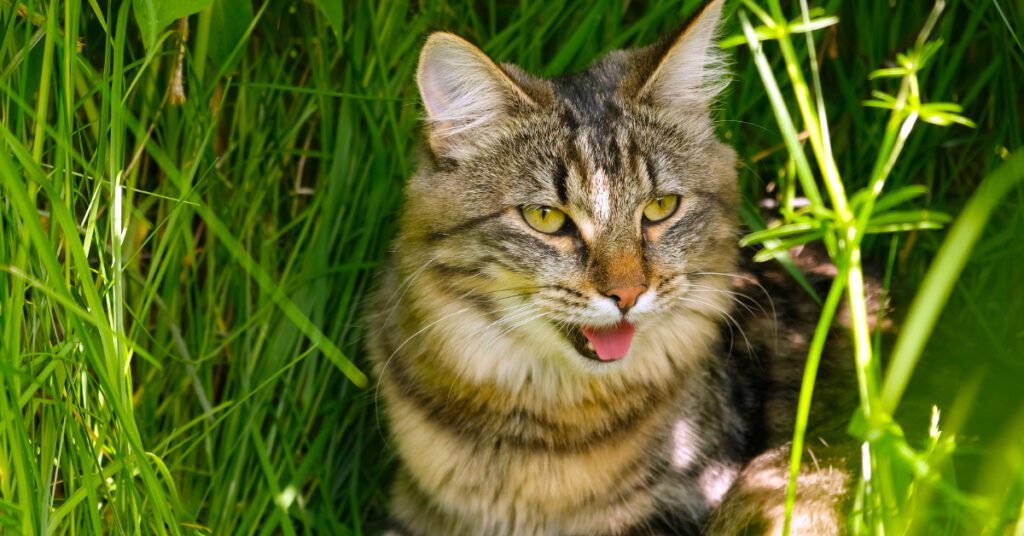
Cat panting is not something most owners expect to see, and for good reason, it is not normal feline behavior in most situations. While dogs pant regularly as a primary way to cool down, cats only pant on rare and specific occasions. If your cat is panting, it is worth paying close attention, because cat panting is often a sign that something is wrong. At Kryder + Harr Veterinary Clinic in Granger, IN, we want to help you understand when cat panting is an emergency and when it might have a less alarming explanation.
Why Do Cats Pant?
Unlike dogs, cats cool themselves primarily through grooming and their limited sweat glands in the paw pads, not through panting. This means panting in cats serves a narrower set of circumstances than it does in dogs, and most of those circumstances require attention.
When Cat Panting May Be Normal
There are a few situations where brief, temporary panting in cats may not be immediately alarming:
- After intense exercise: A cat that has been playing vigorously may pant briefly to catch their breath. This should resolve within a few minutes.
- Extreme heat: In very hot conditions, some cats may pant, though this is less common than in dogs. Overheating in cats is always a concern.
- High stress: Some cats pant during car rides, veterinary visits, or other stressful events. This is anxiety-related and typically resolves once the stressor is removed.
The key distinction is duration and context. Brief cat panting that resolves quickly in an obviously stressful or physically demanding situation may not require emergency action, but it does warrant monitoring.
When Cat Panting Is a Concern
Cat panting that is unprovoked, prolonged, occurs at rest, or is accompanied by other symptoms is not normal and requires veterinary evaluation. Here are the most common and serious causes:
Respiratory Distress
Conditions that impair a cat’s ability to breathe properly including asthma, pleural effusion (fluid around the lungs), pneumonia, and pyothorax (infection in the chest) can all cause panting as the cat struggles to get enough oxygen. Open-mouth breathing or panting in a cat that is at rest or not visibly stressed is a red flag for respiratory distress.
Heart Disease
Hypertrophic cardiomyopathy (HCM), which is the most common form of heart disease in cats, can cause fluid to accumulate in or around the lungs (heart failure), making breathing very difficult. Panting is one of the signs of congestive heart failure in cats. This is a medical emergency.
Anemia
Severely anemic cats may pant because their blood cannot carry enough oxygen. Anemia in cats can result from blood loss, autoimmune disease, parasites, or chronic illness. Other signs include pale or white gums, lethargy, and weakness.
Pain
Cats in significant pain from trauma, urinary blockage, or internal injury may pant as a stress response. If your cat is panting and appears hunched, reluctant to move, or vocalizing in distress, pain may be the cause.
Heatstroke
Cats can suffer from heatstroke if left in a hot car, in direct sun without water, or in a poorly ventilated space. Panting is an early sign of overheating in cats, followed by drooling, weakness, and collapse if not treated. This is always an emergency.
Signs That Cat Panting Is an Emergency
Seek immediate veterinary care if your cat is panting and any of the following are also present:
- Open-mouth breathing while at rest
- Blue, white, or pale gray gums (cyanosis)
- Labored or clearly distressed breathing
- Inability to find a comfortable position
- Extreme lethargy or weakness
- Any sign of trauma or injury
What to Do If Your Cat Is Panting
If your cat begins panting, stay calm and assess the situation. Move your cat to a cool, quiet area and note how long the panting lasts and whether other symptoms are present. If the cat panting does not resolve within a few minutes, or if any of the emergency signs above are present, contact Kryder + Harr Veterinary Clinic immediately. Do not try to give your cat water forcefully if they are in distress.
Diagnosing and Treating Cat Panting
The treatment for cat panting depends entirely on the underlying cause. At Kryder + Harr Veterinary Clinic, evaluating a panting cat involves a thorough physical exam, chest X-rays, and bloodwork. Respiratory conditions are treated with oxygen therapy, medications to remove fluid, bronchodilators for asthma, or other targeted treatments depending on the diagnosis.
Panting in Cats Deserves Prompt Attention
Cat panting is one of those symptoms that should never be brushed off as “probably nothing.” While it can occasionally have a benign explanation, it more often signals that your cat needs help. If your cat is panting and you are unsure why, reaching out to Kryder + Harr Veterinary Clinic in Granger, IN is always the right call. Call us at (574) 277-6533. Our team is equipped to quickly assess your cat’s condition and provide the care they need.

Recent Posts
About Us
Welcome to Kryder & Harr Veterinary Clinic! Our animal hospital has been a fixture in the Granger community since 1981, practicing full-service veterinary medicine for all our pet parents and their furry family members. At KHVC, we pride ourselves on our history, of providing excellent customer service for our clients, along with dedicated, compassionate, and exceptional medical care for all of our patients.