
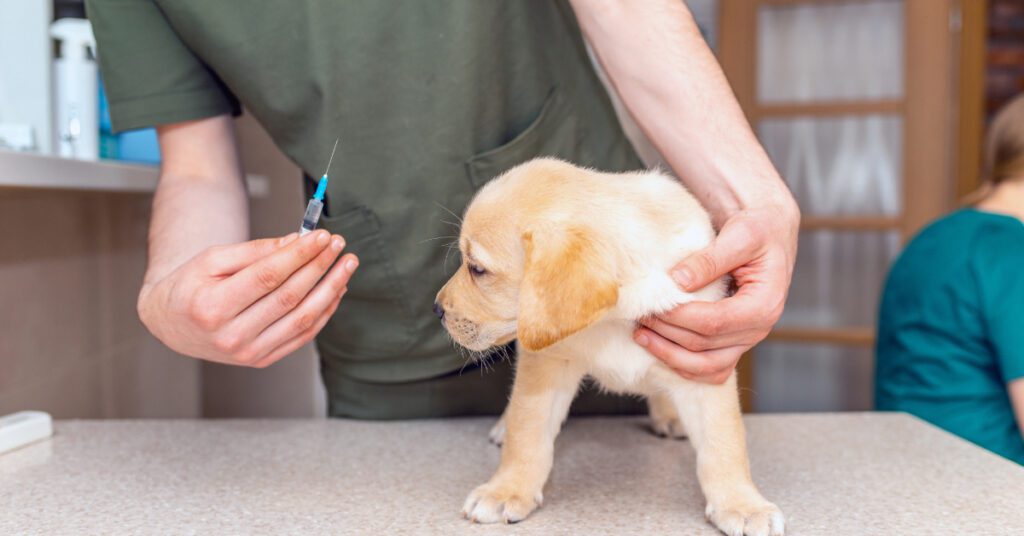
Bringing home a new puppy is one of life’s great joys, and one of the first and most important things you will do for their health is get them started on the right puppy vaccinations schedule. Vaccines protect your puppy from potentially life-threatening diseases during a vulnerable period when their immune systems are still developing. At Kryder + Harr Veterinary Clinic in Granger, IN, our veterinary team guides new puppy owners through every step of their puppy’s vaccination plan so you always know what’s needed and why.
Why Are Puppy Vaccines Important?
Puppies are born with some temporary immunity passed from their mothers through colostrum (the first milk). This maternal immunity begins to wane at around 6–8 weeks of age, leaving puppies vulnerable. Starting a puppy vaccinations schedule at the right time and completing the full series builds your puppy’s own immune protection before they are exposed to pathogens in the environment. Incomplete vaccination leaves gaps in protection, which is why following the recommended puppy vaccinations schedule closely is so important.
Core vs. Non-Core Vaccines: What’s the Difference?
Puppy vaccines are categorized as either core vaccines or non-core vaccines. Understanding the difference helps you make informed decisions with your veterinarian.
Core Vaccines
Core vaccines are recommended for every puppy, regardless of lifestyle or geographic location. They protect against serious, highly contagious, and potentially fatal diseases:
- Distemper: A viral disease affecting the respiratory, gastrointestinal, and nervous systems. Often fatal.
- Adenovirus (Hepatitis): Protects against infectious canine hepatitis.
- Parvovirus: A severe gastrointestinal illness that is highly contagious and deadly, especially in young puppies. Vaccination is critical.
- Parainfluenza: A viral respiratory infection that contributes to kennel cough.
- Rabies: Required by law in most states, including Indiana. Protects both pets and people.
Distemper, adenovirus, parvovirus, and parainfluenza are typically given together as the DA2PP (or DHPP) combination vaccine.
Non-Core Vaccines
Non-core vaccines are recommended based on a puppy’s individual lifestyle, risk of exposure, and geographic factors. Your veterinarian at Kryder + Harr Veterinary Clinic will help determine which of these are appropriate for your puppy:
- Bordetella (Kennel Cough): Highly recommended for any puppy that will attend doggy daycare, boarding facilities, dog parks, or grooming salons.
- Leptospirosis: A bacterial disease spread through contaminated water and soil, contact with wildlife, and infected urine. Recommended for dogs with outdoor exposure in Indiana.
- Lyme disease: Important for puppies in areas with high tick populations, especially if they spend time in wooded or tall-grass environments.
- Canine Influenza: Recommended for high-risk dogs in areas with known outbreaks.
The Puppy Vaccination Schedule
The standard puppy vaccinations schedule involves a series of shots given every 3–4 weeks during the puppy’s most vulnerable developmental period. Here is a general timeline:
6–8 Weeks
First DA2PP combination vaccine. This initial dose begins the series. At this age, maternal antibodies are still partially present, which is why the series must continue with booster shots.
10–12 Weeks
Second DA2PP booster. Leptospirosis vaccine (first dose). Bordetella vaccine if applicable to the puppy’s lifestyle. This is often the first scheduled puppy visit for dogs that were adopted from shelters or breeders at 8 weeks.
14–16 Weeks
Third DA2PP booster. Second leptospirosis dose. Rabies vaccine (required). Final shots in this series should be administered at or after 16 weeks to ensure maternal antibody interference has resolved.
12–16 Months
Booster DA2PP. Rabies booster (one-year or three-year formulation depending on the product and local regulations). Annual or triennial boosters are then maintained throughout adult life.
Common Questions About the Puppy Vaccinations Schedule
Can Puppies Go Outside Before Finishing Vaccines?
This is one of the most common questions new puppy owners ask. Puppies can and should begin socialization including some outdoor exposure before they are fully vaccinated, but exposure to high-risk environments (dog parks, pet stores, areas frequented by unknown dogs) should be limited until 2 weeks after the final puppy series is complete. Your veterinarian can advise on age-appropriate socialization strategies.
What If a Vaccination Was Missed?
If a vaccine in the series is delayed, the series can typically be restarted without starting completely from scratch, depending on how long the gap was. Contact Kryder + Harr Veterinary Clinic if you have missed a scheduled vaccine and we will help determine the best path forward.
Puppy Vaccines Are Just the Beginning of Lifelong Protection
Getting your puppy off to the right start with vaccines is one of the most impactful health investments you can make. But a puppy vaccinations schedule is just one part of a comprehensive health plan that also includes parasite prevention, nutrition guidance, microchipping, spay/neuter planning, and behavioral support. The team at Kryder + Harr Veterinary Clinic in Granger, IN is ready to partner with you from day one. Call us at (574) 277-6533 to schedule your puppy’s first appointment. We cannot wait to meet your new family member.

Recent Posts
About Us
Welcome to Kryder & Harr Veterinary Clinic! Our animal hospital has been a fixture in the Granger community since 1981, practicing full-service veterinary medicine for all our pet parents and their furry family members. At KHVC, we pride ourselves on our history, of providing excellent customer service for our clients, along with dedicated, compassionate, and exceptional medical care for all of our patients.