
Cat asthma is one of the most common chronic respiratory conditions in feline medicine, affecting an estimated 1–5% of domestic cats. If your cat has been diagnosed with feline asthma or you have been noticing coughing, wheezing, or labored breathing, understanding this condition is the first step toward helping your cat live comfortably. At Kryder + Harr Veterinary Clinic in Granger, IN, our veterinary team provides comprehensive care for cats with asthma and wants to equip you with the knowledge to support your cat every day.
What Is Cat Asthma?
Cat asthma is a chronic inflammatory disease of the lower airways. In an asthmatic cat, the airways, specifically the bronchi and bronchioles, become hypersensitive to certain inhaled triggers. When exposed to these triggers, the airways swell, produce excess mucus, and go into bronchospasm (constriction), making it difficult for air to move in and out of the lungs. This is why asthmatic cats may exhibit a characteristic hunched posture, neck extended, during a coughing or breathing episode.
How Is Cat Asthma Different from Chronic Bronchitis?
Feline chronic bronchitis and feline asthma are related but distinct conditions. In asthma, the airway inflammation is reversible. It can improve with treatment and between episodes. Chronic bronchitis involves persistent, irreversible airway remodeling. Some cats have features of both. Your veterinarian at Kryder + Harr Veterinary Clinic will work to distinguish between them, as this affects treatment decisions.
Signs and Symptoms of Cat Asthma
Recognizing the symptoms of cat asthma is essential for early intervention:
- Coughing which is often the most prominent sign; may be mistaken for hairballs
- Wheezing or high-pitched breathing sounds
- Rapid or labored breathing
- Open-mouth breathing at rest (an emergency sign)
- Exercise intolerance
- Crouching low with the neck extended and elbows out during breathing difficulty
- Blue or gray gums in severe cases (cyanosis — seek emergency care immediately)
What Triggers Cat Asthma?
Cat asthma attacks are triggered by inhaled substances that provoke an inflammatory response in the airway. Common triggers include:
- Cigarette, pipe, or vaping smoke (one of the most significant triggers)
- Dusty cat litter or clumping clay litters in particular
- Aerosol sprays including air fresheners, cleaning products, and hairspray
- Candles, incense, and diffuser oils
- Pollen and seasonal allergens
- Mold and household dust
- Strong perfumes or cologne
Identifying and eliminating or reducing your cat’s triggers is one of the most impactful things you can do outside of medication management.
How Is Feline Asthma Diagnosed?
Diagnosing cat asthma involves ruling out other conditions with similar presentations. Respiratory infections, heart disease, parasites, pleural effusion, and tumors can all mimic asthma. At Kryder + Harr Veterinary Clinic, diagnostics typically include chest X-rays (which may show the characteristic hyperinflated or “overinflated” appearance of asthmatic lungs), a complete blood count and chemistry panel, fecal exam to rule out lungworms, and heartworm testing. A bronchoalveolar lavage (BAL), where fluid is used to sample the airways, provides the most definitive diagnosis and can also identify concurrent infections.
Treatment for Cat Asthma
While cat asthma cannot be cured, it can be very well managed. The goals of treatment are to reduce airway inflammation, prevent bronchospasm, minimize trigger exposure, and give your cat the best possible quality of life.
Corticosteroids
Anti-inflammatory steroids are the cornerstone of cat asthma treatment. They reduce airway inflammation and dramatically decrease the frequency and severity of asthma episodes. They can be given orally (prednisolone), by injection, or via inhaler. Long-term steroid use does carry potential side effects, so your veterinarian will work to find the lowest effective dose.
Bronchodilators
Bronchodilators such as albuterol relax the smooth muscle of the airways, opening them up during and after an cat asthma episode. They are often used as rescue medication during acute attacks.
Inhalers for Cats
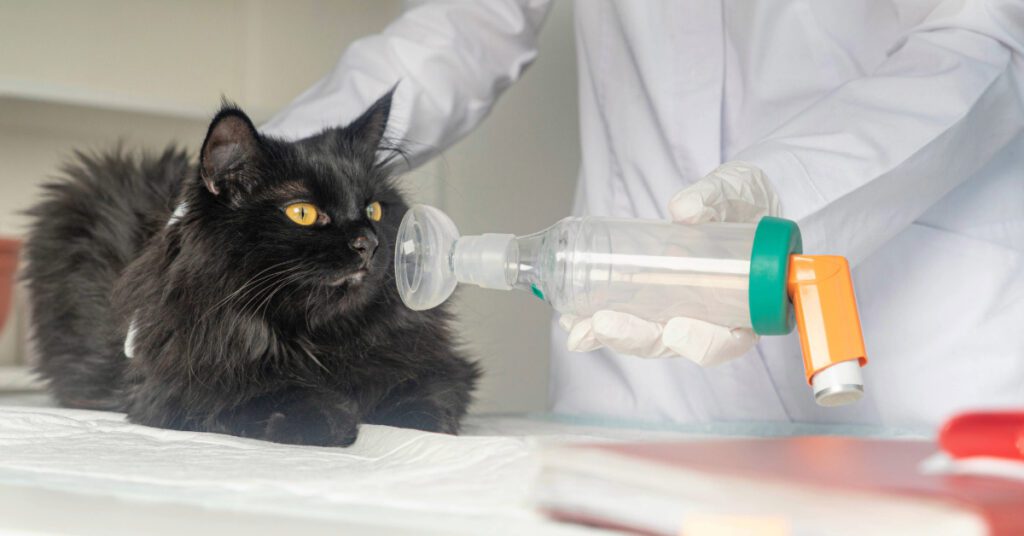
Inhaled medications are increasingly preferred for managing cat asthma because they deliver medication directly to the lungs, reducing systemic side effects. The AeroKat spacer device is designed specifically for cats and makes inhaled treatment practical and well-tolerated. Many cats adapt to inhaler use quickly with positive reinforcement.
Environmental Modifications
Alongside medications, environmental management is critical:
- Switch to low-dust, unscented cat litter.
- Use air purifiers with HEPA filters in rooms where your cat spends time.
- Eliminate aerosols, scented candles, and air fresheners from the home.
- Ensure your cat is never exposed to cigarette or other smoke.
- Vacuum and dust regularly to reduce allergen load.
What to Do During a Cat Asthma Attack
If your cat is in the middle of a severe asthma attack, stay calm. Open windows for fresh air, administer rescue bronchodilator if prescribed, and transport your cat to an emergency veterinary clinic if they are in significant distress. Blue or gray gums are a sign of oxygen deprivation and require immediate emergency care.
Life with a Cat with Asthma
Cat asthma is manageable, and many cats with this diagnosis go on to live long, comfortable lives with the right care. Regular follow-up appointments at Kryder + Harr Veterinary Clinic allow for ongoing monitoring and treatment adjustments. If your cat has recently been diagnosed with feline asthma or you are noticing respiratory symptoms, we are here to help you build a management plan that supports your cat every day. Call us at (574) 277-6533.

Recent Posts
About Us
Welcome to Kryder & Harr Veterinary Clinic! Our animal hospital has been a fixture in the Granger community since 1981, practicing full-service veterinary medicine for all our pet parents and their furry family members. At KHVC, we pride ourselves on our history, of providing excellent customer service for our clients, along with dedicated, compassionate, and exceptional medical care for all of our patients.