
You have probably noticed that your dog’s nose is almost always cool and moist to the touch and maybe wondered, “Why is a dog’s nose wet in the first place?” It turns out there are some genuinely fascinating reasons behind that perpetually damp snout. At Kryder + Harr Veterinary Clinic in Granger, IN, we love helping pet owners understand the biology behind their dogs’ quirks. Here is the science-backed explanation for why dogs have wet noses and what it means when that nose is dry.
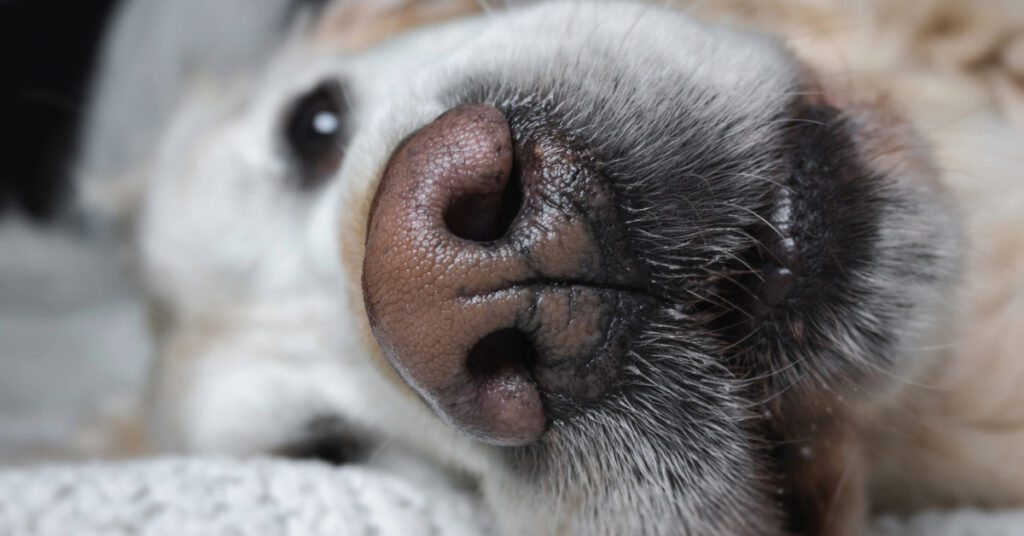
The Science Behind Why Dogs Have Wet Noses
A dog’s nose is wet for several distinct reasons, and each one serves an important biological purpose. This is not just an anatomical accident. Moisture plays an active role in how your dog interacts with the world.
Mucus Production
The inner lining of a dog’s nasal passages produces a thin layer of mucus. This mucus helps trap scent particles from the air, which significantly enhances your dog’s ability to smell. Dogs have up to 300 million olfactory receptors compared to the approximately 6 million found in humans and a moist nose helps maximize the efficiency of every single one. The moisture dissolves scent chemicals and draws them into contact with those receptors, making your dog’s sense of smell even more powerful.
Licking Their Nose
Dogs frequently lick their noses and you have probably watched your dog do it dozens of times. This licking serves a dual purpose. It keeps the nose moist, which as we just covered improves scent detection, and it also transfers scent molecules from the nose to special scent glands in the roof of the mouth called the Jacobson’s organ (also known as the vomeronasal organ). This gives dogs a second way to “taste” or analyze scents in their environment.
Glands in the Nose
Dogs also have specialized glands within the nasal tissue that produce moisture directly. These glands help maintain the nose’s damp surface even in dry environments, ensuring that the scent-trapping function is consistent regardless of conditions.
Thermoregulation
Unlike humans, dogs do not sweat through most of their skin. They rely primarily on panting and the moisture on their paw pads and nose to help regulate body temperature. A dog’s wet nose contributes a small but meaningful amount to their ability to stay cool, especially in warm weather.
Is a Wet Nose Always a Sign of a Healthy Dog?
Not necessarily. While a wet nose is normal and often associated with a healthy, alert dog, nose moisture alone is not a reliable indicator of overall health. A dog can have a wet nose and be sick, and a dog can have a dry nose and be perfectly healthy. The most important thing to look at is your dog as a whole: their energy level, appetite, behavior, and other physical signs.
When Is a Dry Dog Nose Normal?
A dry dog nose is completely normal in the following situations:
- After sleeping or resting: Dogs do not lick their noses when they sleep, so the nose dries out.
- In dry or heated air: Low-humidity environments can dry out a dog’s nose temporarily.
- In sunlight: Lying in the sun for a period of time can temporarily dry the nose.
- After exercise: Panting can sometimes temporarily dry a dog’s nose.
When Should a Dry Nose Be a Concern?
A persistently dry, cracked, or crusty nose, especially when accompanied by other symptoms, can sometimes signal a problem. Conditions like pemphigus (an autoimmune disease), zinc-responsive dermatosis, hyperkeratosis, or fever can affect the nose’s appearance and moisture level. If your dog’s nose is also producing thick, colored discharge, or if the dryness comes with lethargy, vomiting, or loss of appetite, it is worth a call to Kryder + Harr Veterinary Clinic.
What If My Dog’s Nose Is Running?
A small amount of clear nasal discharge is normal and simply part of the nose-moisture mechanism. However, a runny nose with thick, yellow, green, or bloody discharge is not normal and should be evaluated by your veterinarian. This could point to a respiratory infection, foreign body, nasal polyp, or in rare cases, a nasal tumor.
Caring for Your Dog’s Nose
Generally speaking, a dog’s nose takes care of itself. You do not need to apply anything to it unless directed by your veterinarian. If your dog’s nose becomes persistently dry, cracked, or develops visible sores or color changes, schedule an appointment at Kryder + Harr Veterinary Clinic in Granger, IN. Our veterinarians can assess whether the changes are cosmetic or indicate an underlying condition that needs treatment.
A Wet Nose Is a Working Nose
So the next time your dog greets you with a cold, damp nose pressed to your hand, and you’re left wondering, “Why is a dog’s nose wet?”, you can appreciate just how much biological sophistication is behind that simple sensation. A wet dog nose is a sign of a finely tuned sensory organ doing its job beautifully. And when something changes, the team at Kryder + Harr Veterinary Clinic is here to help you figure out what it means. Call us at (574) 277-6533.
Recent Posts
About Us
Welcome to Kryder & Harr Veterinary Clinic! Our animal hospital has been a fixture in the Granger community since 1981, practicing full-service veterinary medicine for all our pet parents and their furry family members. At KHVC, we pride ourselves on our history, of providing excellent customer service for our clients, along with dedicated, compassionate, and exceptional medical care for all of our patients.