
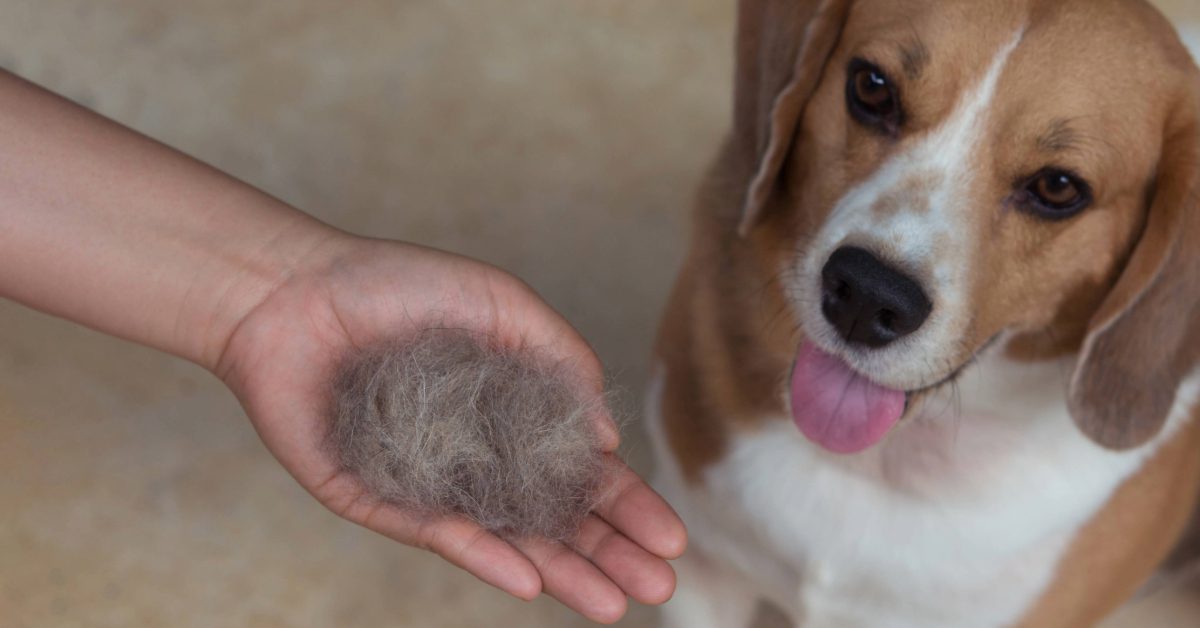
You should be concerned about hair loss in dogs when it is sudden, patchy, or symmetrical, or when it comes with itching, redness, sores, odor, or changes in energy or appetite. Normal shedding leaves a full coat behind, while true hair loss leaves thin spots or bare skin. Most pet parents have vacuumed up a season’s worth of fur, so it can be hard to tell when a few extra tufts on the couch mean something more. This guide from Kryder & Harr Veterinary Clinic in Granger, IN, explains how to tell the difference, what commonly triggers hair loss in dogs, how veterinarians find the cause, and what recovery looks like. It also covers habits that may lower the odds of a repeat problem, so you can spot changes early and get your dog the right care.
What Is Hair Loss in Dogs, and What Does It Look Like?
Hair loss in dogs, known to veterinarians as alopecia, means a dog has less coat than its breed, age, and season would normally produce. It can be partial or complete, and it can affect one small area or the whole body.
Shedding vs. True Hair Loss
Shedding is a healthy process. Dogs replace old hair with new growth, and double-coated breeds such as Huskies and Golden Retrievers “blow” their undercoats once or twice a year. Normal shedding is even across the body and leaves the skin looking smooth and healthy. Hair loss in dogs looks different. You may see bare patches, thinning in one region, a rough or uneven coat, or skin that appears irritated beneath the fur.
Symptoms of Hair Loss in Dogs
Symptoms vary with the underlying cause, so the details you notice can help your veterinarian. Common signs include:
- Round or irregular bald patches
- Thinning fur along the flanks, tail, or belly
- Red, flaky, or darkened skin
- Constant licking, chewing, or scratching
- Scabs, bumps, or moist spots
- A dull, brittle, or greasy coat
- Low energy or appetite changes alongside coat changes
When Should You Be Concerned?
Call your veterinarian if the thinning lasts more than a few days, keeps spreading, or appears in a symmetrical pattern on both sides of the body. Swelling, open sores, a strong odor, or a dog who seems tired or unwell should be seen promptly. Even mild hair loss in dogs is worth a phone call, since early answers usually mean simpler care.
What Causes Hair Loss in Dogs?
Many different conditions can lead to hair loss in dogs, and several of them look alike on the surface. Sorting out the true cause takes a professional exam, but knowing the main categories helps you describe what you are seeing.
Allergies
Dogs can react to environmental triggers such as pollen and dust mites, to certain food ingredients, or to flea saliva. The itch drives scratching and chewing, and the hair thins where the skin takes the beating. Allergy-related hair loss in dogs often shows up around the paws, belly, ears, and base of the tail.
Parasites and Skin Infections
Fleas, mange mites, and other parasites can irritate the skin and damage hair follicles. Bacterial and yeast infections often follow, especially when the skin is already inflamed. Ringworm, a fungal infection, can cause circular bald spots and can spread to people and other pets, which is one more reason to have unusual patches checked.
Hormonal and Internal Conditions
Some cases begin inside the body rather than on the skin. Thyroid disease and adrenal disorders such as Cushing’s disease can change how a coat grows. Hair loss in dogs from hormonal causes is often symmetrical and may not itch at all, so a dog can look otherwise comfortable while the coat slowly thins.
Other Contributors
A few additional factors can play a role:
- Stress or boredom that leads to excessive licking
- Genetic patterns, seen in breeds such as Dachshunds and Greyhounds
- Reactions to medications or grooming products
- Nutritional imbalances
- Pressure spots from hard surfaces, common in older or large dogs
- Healing after an injury or surgery
How Are Hair Loss in Dogs Diagnosed and Treated?
Veterinarians work through a step-by-step process to explain hair loss in dogs, and treatment always follows the cause. Because so many conditions overlap, this process protects your dog from trial-and-error care.
How Veterinarians Diagnose Hair Loss in Dogs
Your veterinarian will start with questions. When did you first notice the thinning? Has your dog’s diet, shampoo, or routine changed? Is there itching? From there, a full physical exam looks at the coat, skin, ears, and overall health. Depending on what the exam shows, our team may recommend:
- Skin scrapings to look for mites
- Cytology, which examines skin samples under a microscope for bacteria and yeast
- A fungal culture to check for ringworm
- Bloodwork to evaluate thyroid and adrenal function
- Allergy or diet evaluations
- A skin biopsy in more complicated cases
Each test answers a specific question, and the results guide what comes next. At Kryder & Harr Veterinary Clinic, the goal is to match the plan to your dog’s individual findings rather than treat the symptom alone.
Treatment of Hair Loss in Dogs
Treatment depends entirely on the diagnosis. Parasites call for targeted parasite control. Infections may need prescription antibiotics or antifungals. Hormonal conditions are managed with medication and monitoring, and allergies often require a longer-term plan that may include diet changes, medicated products, or other prescriptions. When stress is behind the licking, your veterinarian can suggest behavioral support and enrichment ideas suited to your dog. Only a veterinarian should choose and dose medications. Leftover pills, human products, and online remedies can worsen skin problems or hide clues your veterinarian needs.
Recovery, Management, and Prevention of Hair Loss in Dogs
Recovery from hair loss in dogs takes patience, and prevention takes consistency. The good news is that many dogs regrow a healthy coat once the underlying cause is under control.
What Recovery Looks Like
Regrowth usually begins within weeks of successful treatment, though a full coat can take a few months to return. New hair may come in slightly different in color or texture at first. Follow-up visits matter here, because your veterinarian can confirm the skin is healing and adjust the plan if progress stalls.
Long-Term Management
Some causes, such as allergies and hormonal disorders, are managed rather than cured. Dogs with these conditions do best with a steady routine: recheck exams on the schedule your veterinarian sets, consistent parasite prevention, and prompt calls when symptoms return. Tracking flare-ups with a few notes or photos can help your veterinary team see patterns over time.
Prevention of Hair Loss in Dogs
Not every case can be prevented, but these habits give your dog a head start:
- Schedule regular wellness exams so subtle skin changes get noticed early
- Use year-round parasite prevention recommended by your veterinarian
- Feed a complete and balanced diet suited to your dog’s age and needs
- Brush your dog regularly to spread natural oils and spot problems sooner
- Offer exercise, play, and mental stimulation to reduce stress-related licking
- Ask your veterinarian before switching shampoos or grooming products
Your Dog’s Coat Is Worth a Closer Look
A dog’s coat often tells you how the rest of the body is doing. A patch that looks minor today can be the first hint of an allergy, a parasite, or a hormonal change that responds best to early attention. If you have noticed thinning fur, unusual bald spots, or new scratching habits, you do not need to wait for things to worsen before reaching out.
Our team at Kryder & Harr Veterinary Clinic serves pet families throughout Granger and the surrounding area, and we are glad to examine your dog, explain what we find, and build a plan that fits your pet. Call us today at (574) 277-6533 to schedule a visit and give your dog the comfort of healthy skin and a thick, shiny coat.
Recent Posts
About Us
Welcome to Kryder & Harr Veterinary Clinic! Our animal hospital has been a fixture in the Granger community since 1981, practicing full-service veterinary medicine for all our pet parents and their furry family members. At KHVC, we pride ourselves on our history, of providing excellent customer service for our clients, along with dedicated, compassionate, and exceptional medical care for all of our patients.