
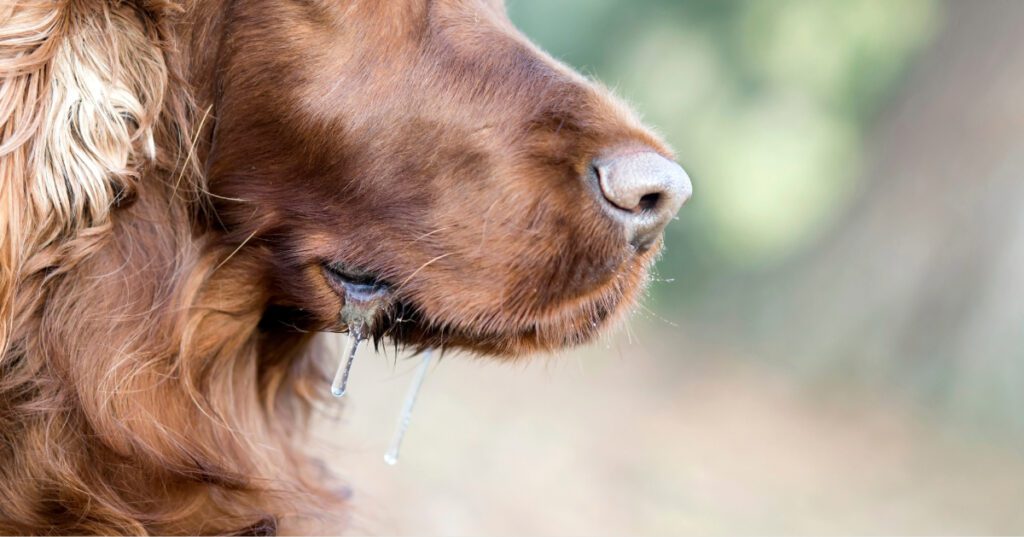
Some dogs are naturally drooly. Mastiffs, Bloodhounds, Saint Bernards, and similar breeds are famous for it. But when a dog that does not normally drool much suddenly starts drooling excessively, or when any dog’s drooling seems out of the ordinary, it is worth paying attention. Excessive dog drooling can be a sign of anything from nausea to a dental problem to something stuck in your dog’s mouth. At Kryder + Harr Veterinary Clinic in Granger, IN, our veterinary team can help owners understand the many possible causes of dog drooling and when it signals something that needs medical attention.
What Causes Normal Dog Drooling?
Saliva is an important part of digestion. Dogs produce saliva to lubricate food, begin the digestive process, and keep their mouths moist. The amount of saliva a dog produces naturally varies widely by breed, anatomy, and individual physiology. Dogs with loose, heavy jowls like Saint Bernards, Basset Hounds, and Newfoundlands simply have anatomy that allows more saliva to escape the mouth, leading to the classic drooling appearance. This type of dog drooling is entirely normal. Anticipating food also stimulates saliva production, also known as the famous “Pavlovian response”, so a dog that drools when you open the refrigerator is just being a dog.
When Dog Drooling Becomes Excessive
Hypersalivation, which is the medical term for excessive saliva production, can be caused by a wide range of conditions. Here are some of the most common reasons a dog might start drooling more than usual:
Dental Disease and Oral Pain
Dental problems are one of the most common causes of sudden or excessive dog drooling. Periodontal disease, broken teeth, oral infections, mouth ulcers, and tumors of the mouth can all lead to increased drooling. If your dog is drooling and also pawing at their mouth, dropping food, chewing on one side, or showing reluctance to eat, a dental exam at Kryder + Harr Veterinary Clinic is a good first step.
Nausea and Motion Sickness
Dogs that feel nauseous often drool heavily. This can happen in the car (motion sickness), before or after vomiting, or as a side effect of certain medications. If your dog drools during car rides, there are veterinary-approved anti-nausea and motion sickness treatments available. Ask our team about options.
Foreign Body in the Mouth or Throat
A stick, bone fragment, or piece of toy lodged in your dog’s mouth, between teeth, or in the throat can cause sudden, intense drooling. Your dog may also paw at their mouth, gag, retch, or have difficulty swallowing. Check inside your dog’s mouth if you can do so safely, but if you suspect something is stuck in the throat, contact a veterinarian immediately.
Toxin Ingestion or Poisoning
Many toxins including certain plants, pesticides, toad secretions, and household chemicals cause hypersalivation as one of the first signs. If your dog suddenly starts drooling profusely and you suspect they may have ingested something toxic, this is an emergency. Contact your veterinarian or the ASPCA Animal Poison Control Center (888-426-4435) right away.
Heatstroke
In hot weather, excessive panting and drooling can be signs of heatstroke. If your dog has been in a hot car, in direct sun, or been exercising in high heat and begins drooling heavily alongside weakness, vomiting, or disorientation, treat this as an emergency and seek veterinary care immediately.
Anxiety and Stress
Some dogs drool heavily when they are stressed or anxious: at the veterinary office, during thunderstorms, or in unfamiliar situations. This type of drooling usually resolves when the stressor is removed, but chronic stress-related drooling can be addressed as part of an anxiety management plan.
Signs That Excessive Dog Drooling Needs Immediate Vet Attention
Seek emergency veterinary care if your dog’s excessive drooling is accompanied by any of the following:
- Vomiting, especially multiple times
- Difficulty swallowing or breathing
- Pale or blue gums
- Known or suspected toxin exposure
- Collapse or extreme weakness
- Sudden swelling of the face or throat
Diagnosing the Cause of Excessive Drooling
At Kryder + Harr Veterinary Clinic, evaluating excessive drooling starts with a thorough oral exam, followed by additional diagnostics as needed, which might include blood work, urinalysis, X-rays, or further imaging depending on what is found. Getting to the root cause is essential, because treatment options vary dramatically depending on what is driving the hypersalivation.
Drooling That Is Worth a Second Look
While some degree of dog drooling is completely normal, a sudden change in your dog’s drooling habits, especially when accompanied by other symptoms, deserves attention. When in doubt, it is always better to call Kryder + Harr Veterinary Clinic in Granger, IN at (574) 277-6533 and discuss what you are seeing. Our team can help you determine whether a same-day visit is warranted or whether watchful monitoring is appropriate.
Recent Posts
About Us
Welcome to Kryder & Harr Veterinary Clinic! Our animal hospital has been a fixture in the Granger community since 1981, practicing full-service veterinary medicine for all our pet parents and their furry family members. At KHVC, we pride ourselves on our history, of providing excellent customer service for our clients, along with dedicated, compassionate, and exceptional medical care for all of our patients.