
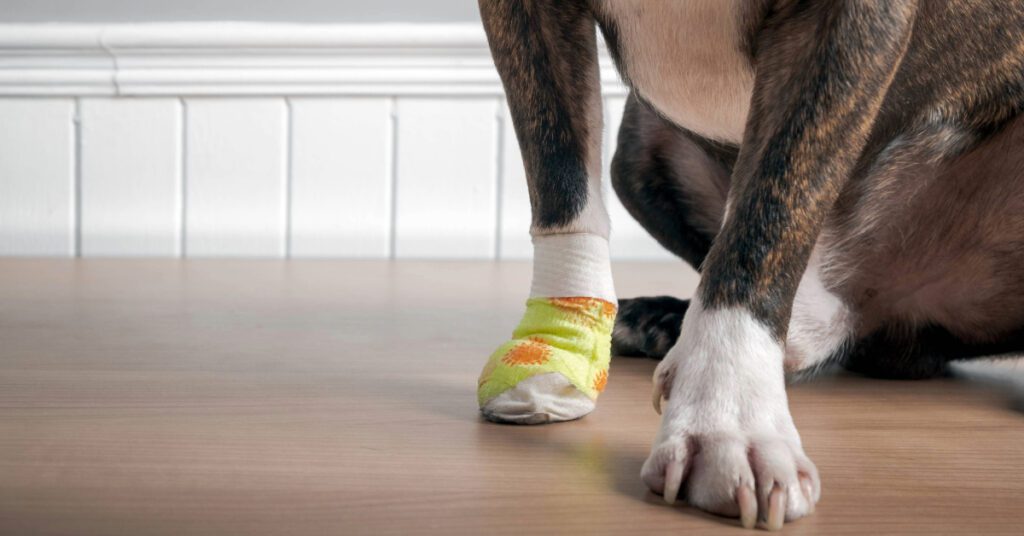
Dog paw injuries are more common than many owners realize. A dog’s paws endure a lot such as rough pavement, hot asphalt, sharp debris, ice, and more, and injuries can range from superficial scrapes to serious wounds requiring veterinary care. When your dog has an injured paw, knowing the difference between something you can monitor at home and something that needs prompt treatment can save your dog from unnecessary pain and complications. The team at Kryder + Harr Veterinary Clinic in Granger, IN sees paw injuries regularly and wants to help you recognize when it is time to come in, so we can provide prompt injured dog paw treatment.
Common Types of Dog Paw Injuries
Dog paw injuries come in many forms. Understanding the type of injury helps guide appropriate care:
- Cuts and lacerations: From glass, sharp rocks, or metal; may be superficial or deep.
- Torn or broken nails: Painful and often bleed significantly; may expose the quick.
- Burned paw pads: From hot pavement, sand, or chemical deicers.
- Cracked or dry paw pads: From cold, dry weather or excessive licking.
- Puncture wounds: From thorns, nails, or splinters; often small but deep and prone to infection.
- Swelling or bruising between the toes: May indicate a foreign body, infection, or sprain.
Sign 1: The Wound Is Deep, Large, or Won’t Stop Bleeding
Minor superficial scrapes on the paw pad may look alarming but often respond well to gentle cleaning. However, if a wound is deep enough to expose underlying tissue, is gaping open, or continues to bleed after gentle pressure for 10–15 minutes, your dog needs veterinary attention. Deep lacerations may require suturing to heal properly and prevent infection. Paw injuries bleed heavily because paw pads have a rich blood supply and significant bleeding should always be evaluated.
What to Do Before You Get to the Vet
If your dog has a bleeding paw wound, apply gentle pressure with a clean cloth. Do not apply tourniquet-style pressure. Keep your dog calm and limit their walking. A clean sock secured loosely in place can protect the wound en route to the clinic.
Sign 2: The Wound Shows Signs of Infection
Infection is a significant risk with any paw wound, especially puncture wounds that may be small at the surface but deep internally. Signs that a dog’s paw injury has become infected include:
- Redness, swelling, or warmth around the wound
- Discharge that is yellow, green, or has an odor
- Visible pus
- Your dog licking the area obsessively
- Your dog limping more or showing increased pain over time
Infections need prompt injured dog paw treatment with antibiotics, professional wound care, and possibly drainage if an abscess has formed. Left untreated, paw infections can spread to surrounding tissue and bone.
Sign 3: A Nail Is Torn, Broken, or Hanging
Torn or broken nails are extremely painful and surprisingly common in active dogs. When a nail is broken at or near the quick (the blood vessel inside the nail), it bleeds freely and causes significant discomfort. If a nail is partially detached and hanging, it will need to be professionally trimmed back to remove the damaged portion and prevent further tearing. Your dog may require sedation for this procedure. Broken nails also carry infection risk, particularly if the quick is exposed, so veterinary care is always the right call.
Sign 4: Your Dog Is Limping or Refusing to Bear Weight
Limping or holding a paw up after an injury indicates more than minor discomfort. When a dog refuses to put weight on a paw, this signals significant pain, which could be caused by a wound, foreign body embedded in the pad, broken toe, sprain, or internal injury. Any dog limping on a front or back leg after an apparent paw injury deserves veterinary evaluation to identify the cause and ensure there is no fracture, dislocation, or deep tissue damage.
Injured Dog Paw Treatment: How Your Vet Can Help
At Kryder + Harr Veterinary Clinic, injured dog paw treatment begins with a thorough examination of the paw and surrounding structures. Depending on the injury, treatment may include:
- Wound cleaning and debridement
- Suturing or stapling deep lacerations
- Removing embedded foreign bodies
- Nail trimming or removal of damaged nail
- Bandaging with appropriate padding and protection
- Antibiotics for infection or infection prevention
- Pain management
Preventing Dog Paw Injuries
While you cannot protect your dog from every hazard, there are steps that reduce paw injury risk:
- Check your yard and walking routes for sharp debris, glass, and metal.
- Protect paws in extreme weather using paw wax or dog boots for hot pavement or icy, salt-treated surfaces.
- Keep nails trimmed to an appropriate length.
- Rinse paws after walks to remove salt, chemicals, and debris.
Your Dog’s Paws Carry Them Through Life — Protect Them
A dog’s paws are remarkably tough, but they are not indestructible. When an injury goes beyond minor, getting proper veterinary care ensures your dog heals fully, avoids complications, and gets back to their active life as quickly as possible. If you are unsure whether your dog’s paw needs attention, err on the side of caution and give Kryder + Harr Veterinary Clinic in Granger, IN a call at (574) 277-6533. We are always happy to help you assess the situation and provide injured dog paw treatment.
Recent Posts
About Us
Welcome to Kryder & Harr Veterinary Clinic! Our animal hospital has been a fixture in the Granger community since 1981, practicing full-service veterinary medicine for all our pet parents and their furry family members. At KHVC, we pride ourselves on our history, of providing excellent customer service for our clients, along with dedicated, compassionate, and exceptional medical care for all of our patients.